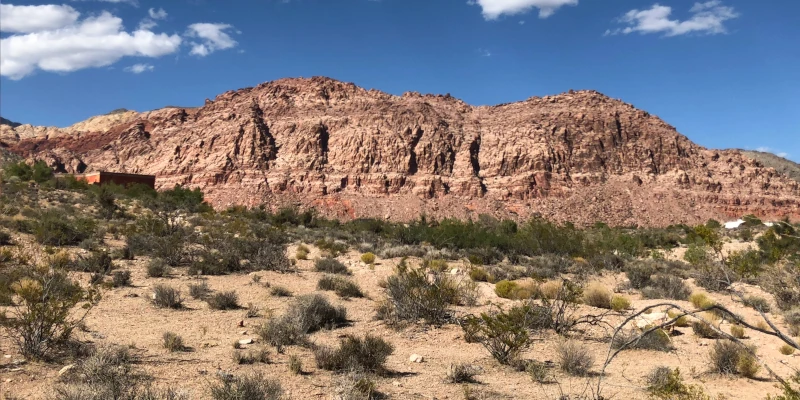
When Las Vegas is mentioned, the collective imagination still insists on lights, casinos, and excess. But there is another territory — silent, monumental, and deeply revealing — that begins just minutes from the Strip. Between Red Rock Canyon National Conservation Area and Valley of Fire State Park, the Mojave Desert shows that true grandeur, more often than not, makes no noise.
This guide is not about “just another tour.” It is about understanding the land, respecting its rhythms, and choosing the right experience according to your profile — something essential when dealing with extreme natural environments.
Red Rock Canyon: living geology 25 km from Las Vegas
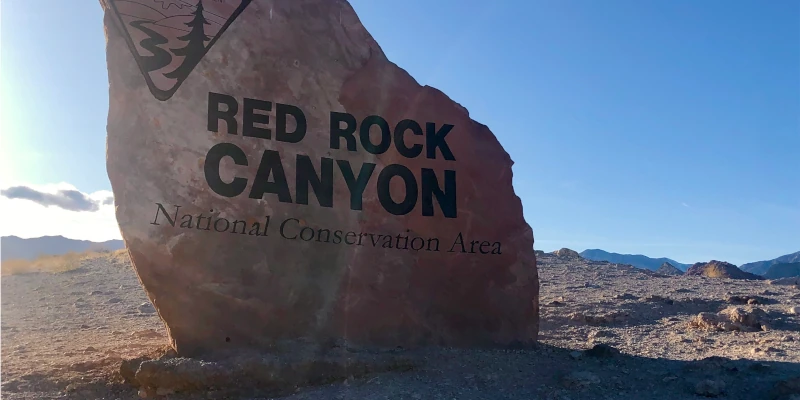
Just 25 kilometers west of the city, Red Rock Canyon impresses not only for its proximity but for the geological complexity it contains. Managed by the Bureau of Land Management (BLM), it is a National Conservation Area — which already signals a more rigorous level of environmental protection.
The main highlight here is the Keystone Thrust, a thrust fault formed around 65 million years ago. In this rare tectonic process, an older layer of gray limestone was literally pushed over younger red sandstone. The result is a striking visual contrast and an open, almost didactic geological record for those who know how to observe.
The red cliffs are composed of Aztec Sandstone, fossilized dunes from the Jurassic period, whose intense coloration comes from the oxidation of iron present in the rock. From an ecological perspective, the altitude — ranging between 1,000 and 2,400 meters — creates a milder microclimate, allowing for surprising biodiversity for a desert environment: more than 600 plant species, including Joshua Trees and even Ponderosa Pines in wetter areas.
What does this mean in practice?
Red Rock is ideal for those looking for trails of varying difficulty, rock climbing, scenic hikes, and a more accessible experience, including half-day visits.
Important: between October and May, access to the Scenic Drive operates with mandatory timed entry, an essential measure to control visitor flow and preserve the ecosystem.
Valley of Fire: the desert in its raw state
About 80 kilometers northeast of Las Vegas, Valley of Fire demands more time — and more respect. Founded in 1935, it is Nevada’s oldest and largest state park, operated by Nevada State Parks.
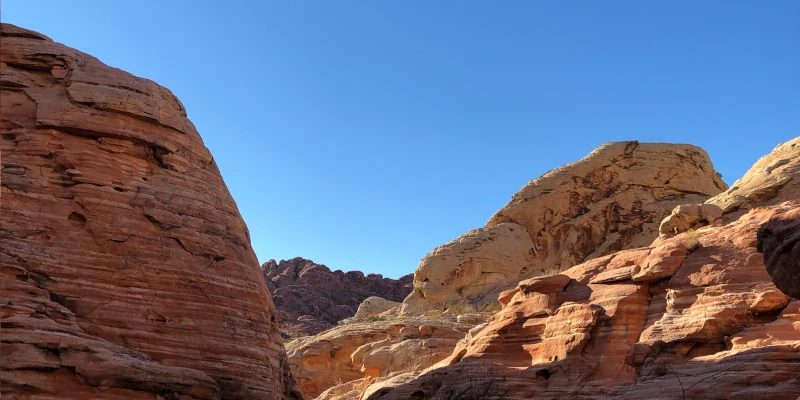
Here, sandstone is also the protagonist, but sculpted in a very different way. The formations are more eroded, curved, and dramatic. The iconic Fire Wave appears almost liquid, with undulating bands of color that shift with the light throughout the day.
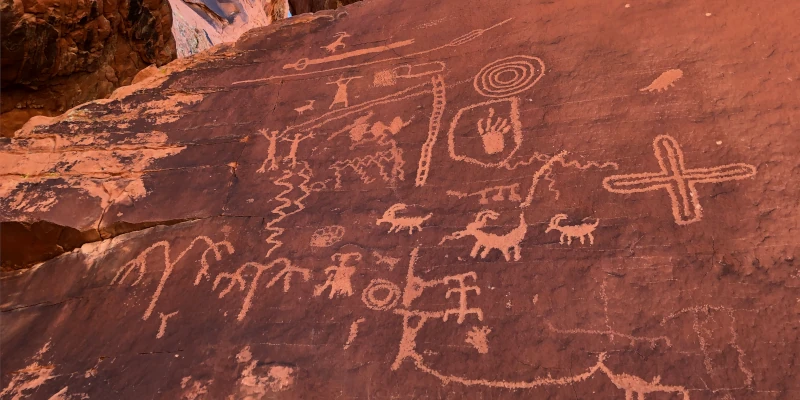
The park also holds valuable anthropological heritage: thousands of petroglyphs left by the Ancestral Puebloan (Anasazi) peoples more than 2,000 years ago. The most accessible site for viewing is Atlatl Rock, where symbols and scenes of ancestral daily life remain etched into the stone.
Another curious — and revealing — detail is the park’s frequent use as a filming location for science fiction movies. The landscape is so “otherworldly” that it often represents other planets on screen.
But take note: because it sits at a lower altitude (600 to 900 meters), Valley of Fire can exceed 45°C in summer. For safety reasons, trails such as the Fire Wave and parts of the Seven Wonders circuit are seasonally closed during periods of extreme heat.
Red Rock or Valley of Fire: which one to choose?
The decision between the two is not about which is “better,” but about which makes the most sense for your time, physical preparation, and expectations.
-
Limited time or first visit: Red Rock Canyon
-
Photography, extreme landscapes, and archaeology: Valley of Fire
-
Milder climate and varied trails: Red Rock
-
Intense, full-day experience: Valley of Fire
In both parks, logistics are a fundamental part of the experience: limited cell service, the need for offline maps, constant hydration (at least 1 liter of water every 2 hours), and absolute respect for marked trails, especially because of the biological soil crusts — essential organisms that take decades to regenerate.
Exploring these parks is a way of understanding that Las Vegas is not only spectacle — it is territory, history, and silence. And it is precisely this contrast that turns an ordinary visit into an authentic experience.
When properly planned, the nature surrounding the city stops being an “extra” and becomes a central part of the travel narrative. Because, in the end, true luxury lies in accessing what few people see — and in knowing how to do it the right way.